The Refrigerated Fleet at a Glance
Single-compartment and dual-compartment units, all running the same insulated body construction. The photo on the left is the tall-body 4.2 tonner; the panels on the right are the daily workhorses.
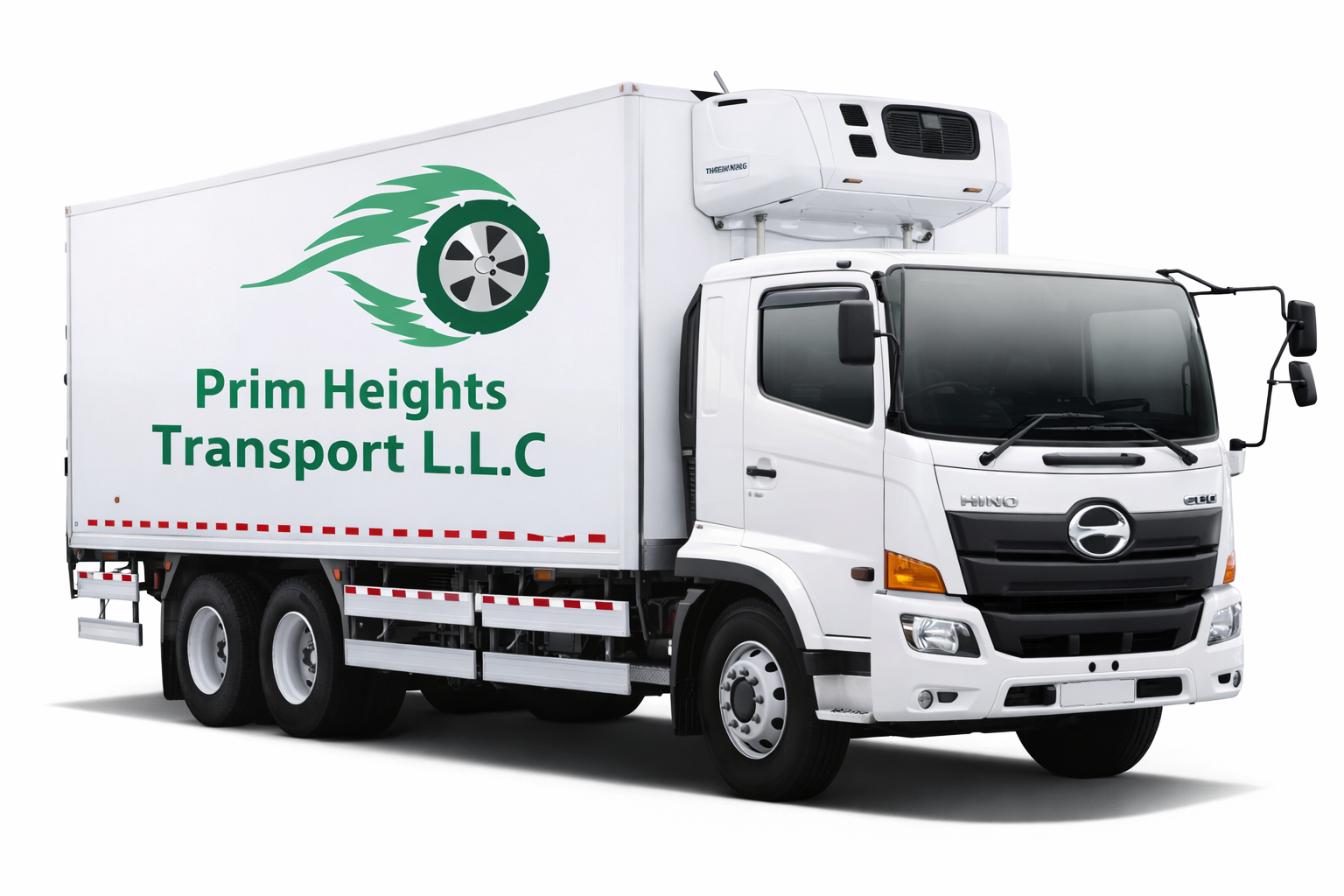
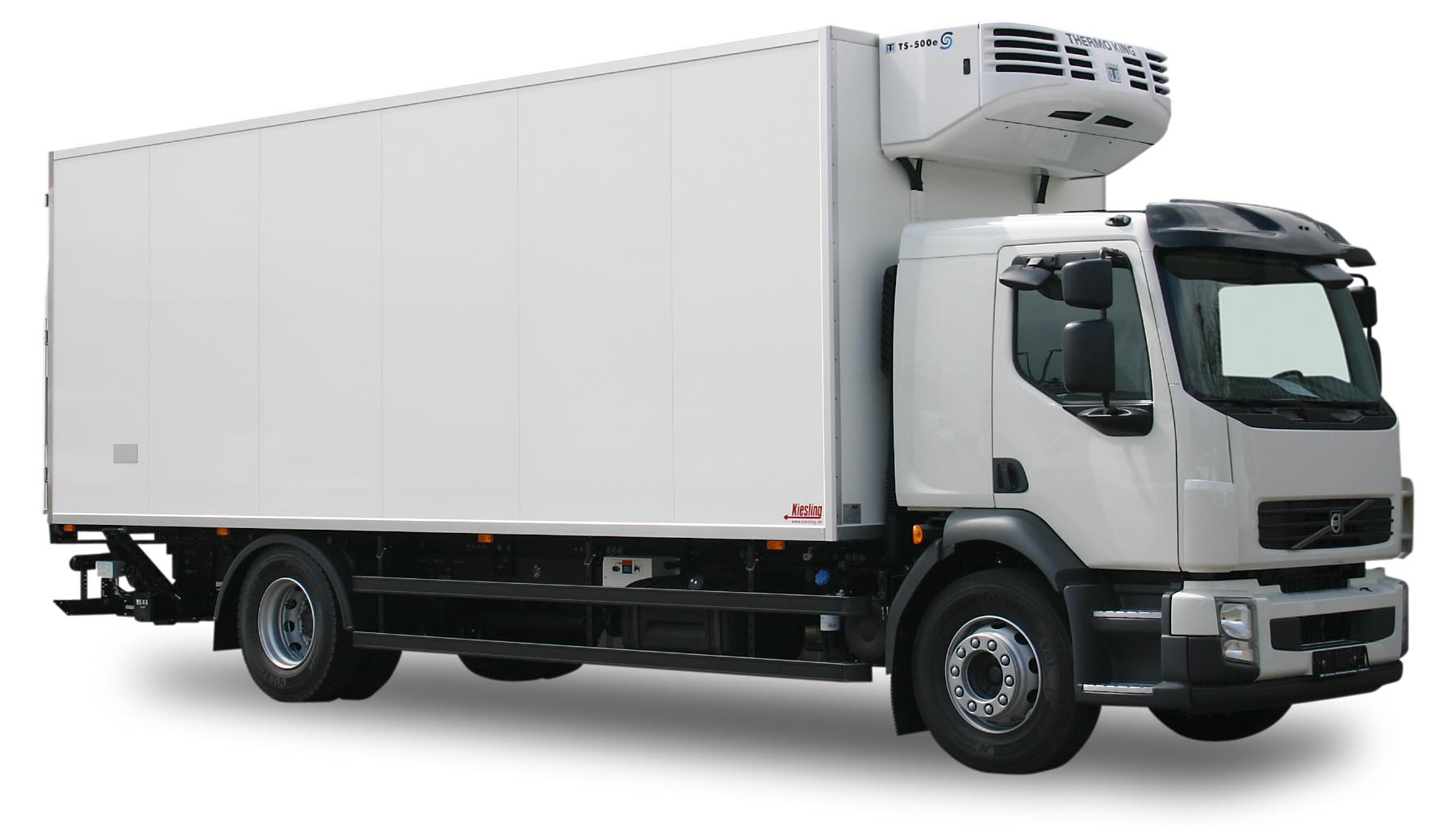



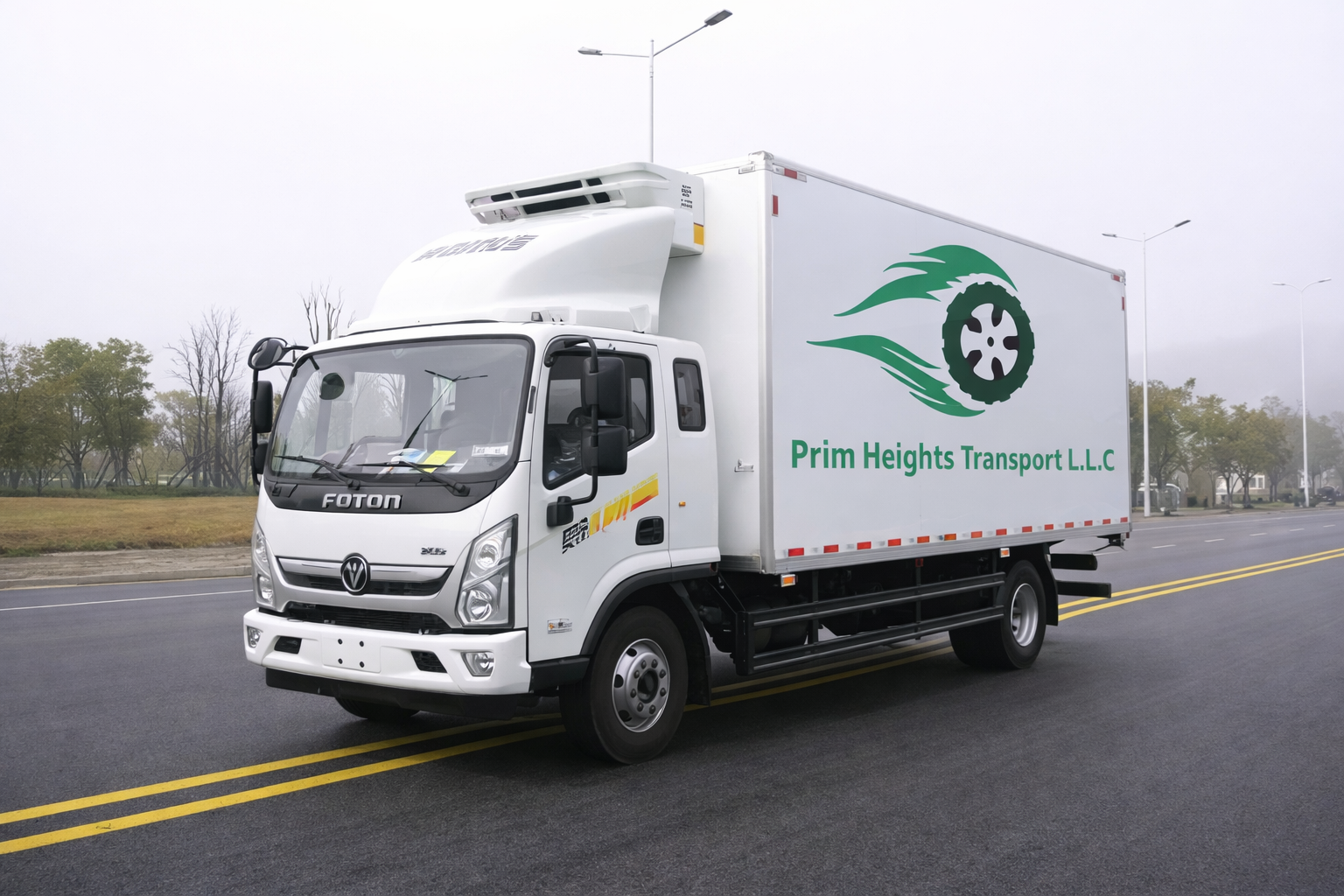
The word "refrigerated" covers more than a single temperature setting. A properly specified refrigerated truck for rent can carry chilled and frozen freight in the same load, with a sealed divider and two separate cooling circuits. This is the vehicle that handles port containers, cold storage transfers and mixed supermarket replenishment without splitting the shipment across two trips.
Single-compartment and dual-compartment units, all running the same insulated body construction. The photo on the left is the tall-body 4.2 tonner; the panels on the right are the daily workhorses.
The name is used loosely in the trade. Customers call a chiller van a refrigerated truck and a freezer truck a chiller truck, and often the receiving team does not know which is on the way. Here is what the term covers in our fleet, so the two sides are talking about the same vehicle.
A refrigerated truck is defined by its cooling capability, not its size. In practice, a refrigerated truck can be set to any point between +25°C (ambient, cooling off) and -25°C (deep frozen). The three temperature bands the fleet commonly runs:
When we send a refrigerated truck, the box is capable of all three bands. The specific temperature is set at booking and locked at handover. A single-compartment truck holds one band per trip. A dual-compartment truck holds two simultaneously.
A chiller truck is defined by its chilled-only configuration. A freezer truck is defined by its frozen-only configuration. A refrigerated truck is defined by its capability to switch between the two — and that switch is what gives it the flexibility that makes it the vehicle most importers, freight forwarders and cold storage operators ask for by default.
The flexibility shows up in three practical ways:
If you know at booking that the load is 100% frozen, a Freezer Truck built specifically for that band holds temperature with less compressor strain than a refrigerated truck set to -25°C. If the load is 100% chilled, a Chiller Truck is the cheaper and more efficient choice. The refrigerated truck wins when the load has both, or when flexibility is worth the small efficiency cost.
The dual-compartment configuration is the feature most customers ask about and least understand. It is not a bigger box with a curtain in the middle — it is a sealed, insulated divider with separate evaporators, separate thermostats and separate temperature logs on each side.
| Configuration | Internal split (typical 4.2 ton) | Best load | Trade-off |
|---|---|---|---|
| Single-compartment chilled | 12 – 14 pallets at 0°C to +8°C | Dairy, produce, pharma | Cannot carry frozen on the same trip |
| Single-compartment frozen | 12 – 14 pallets at -18°C to -25°C | Ice cream, frozen meat, seafood | Cannot carry chilled without raising the temp mid-route |
| Dual-compartment, chilled-heavy | ~8 pallets chilled + ~5 pallets frozen | Supermarket chilled aisle plus a small frozen order | Frozen section is smaller than a full frozen truck |
| Dual-compartment, frozen-heavy | ~5 pallets chilled + ~8 pallets frozen | Frozen distribution with a small chilled add-on | Chilled section is smaller than a full chiller truck |
| Dual-compartment, even split | ~6 pallets chilled + ~6 pallets frozen | Mixed catering or mixed retail replenishment | Neither side is fully optimised for its band |
The divider is a fixed insulated panel installed at the body builder. It is placed at booking based on the pallet split you tell us, and it does not slide during the route. This is different from a curtain-style curtain-sider — the sealed divider is what makes the two-zone cooling work, and it cannot be repositioned between two different loads on the same day.
If you book a dual-compartment truck for a 6-chilled / 6-frozen run and then on the morning of the delivery the split changes to 10-chilled / 2-frozen, the truck still runs with its fixed divider — you cannot expand the chilled section on the day. That is why the pallet split has to be confirmed at the time of booking, not assumed at the loading dock.
Each compartment has its own evaporator and its own thermostat. The chilled side typically cycles at a lower duty than the frozen side, which is why the driver can read two separate temperature values at every handover. The cold storage receiving dock that signs off on the delivery wants both values, not an average.
A refrigerated container arriving at Jebel Ali or Khalifa Port is not going to wait for a van to make three trips. The transfer has to move the entire pallet count in one operation, from cold container to cold box, without the cold chain breaking at the dock.
Our truck meets the container at the terminal gate or at the container freight station. The reefer container is at its set temperature, the truck box is pre-cooled to match, and the pallets move from container to truck in a single opening window. The door is closed behind each pallet batch so the box stays cold throughout.
20ft reefer holds roughly 10 pallets. 40ft high-cube reefer holds roughly 20 to 22 pallets. A 4.2-ton refrigerated truck handles the 20ft directly; the 40ft typically splits across two truck runs, with the first run leaving while the second is loaded.
Jebel Ali Port is the main import gateway for Dubai and the northern emirates. Khalifa Port handles Abu Dhabi import volume, and Zayed Port handles breakbulk and specialised cargo. Our trucks run to all three, with the same dock procedure and the same temperature log at both ends.
A port pass and a vehicle plate registration. For Khalifa Port specifically, the gate pass has to be raised by the receiving party at least 24 hours before the truck is expected at the terminal gate.
The receiving side of a port transfer is usually a cold storage facility with a dock seal and a leveller. The truck's rear door height matches a standard cold storage dock, so the seal closes flush and the pallets move from truck to cold room through a sealed envelope. The box on our truck holds temperature during the transfer even if the dock seal is momentarily open.
The temperature reading at the truck box before opening, the temperature at the container before loading, and a signed handover sheet matching the two. We provide all three.
If the import volume is small — a single pallet of pharmaceuticals or a few boxes of temperature-sensitive cargo — a Refrigerated Van for Rent in Dubai and Abu Dhabi handles the transfer at lower cost than sending a full truck. The rule of thumb: under five pallets, van; over five pallets, truck. For frozen-only port freight, a Freezer Truck or Frozen Van runs the same route as the refrigerated truck. For chilled-only, a Chiller Truck or Chiller Van is the efficient choice.
See the chiller truck rental and fridge van rental pages for the vehicle-specific detail on each configuration.
A refrigerated truck is not a van with a bigger compressor. The insulated box, the door seals, the evaporator placement and the standby circuit all work as a set. If one part of that set is weak, the temperature log at the delivery dock shows it.
The box walls are 60 to 80 mm insulated panels, with a polyurethane core between GRP or aluminium skins. The floor is reinforced for pallet truck entry and the joints between floor, walls and ceiling are sealed — not just insulated but vapour-sealed, because a vapour gap is what turns into a thermal bridge in a UAE summer.
The rear door on our 4.2-ton units is a full-height roller or swing door with a full-perimeter gasket. The gasket is the first thing we check at handover, because a flattened gasket that has run through a full summer is what causes the "box holds temperature at load but loses it on the road" complaint. If the gasket shows wear at the yard, the truck is swapped before dispatch.
The floor is rated for pallet truck entry and for forklift movement on the larger units. A floor that flexes under a loaded pallet breaks the vapour seal and starts a thermal bridge. Our boxes are checked for floor deflection at every service interval.
This is the part most hire quotes do not mention. A refrigerated truck with a standby circuit keeps the cooling unit running on a separate power feed when the engine is off — during a port gate check, during a dock wait, during a cold storage transfer. Without standby power, the box starts warming the moment the engine stops.
Without a standby circuit, the driver either leaves the engine running for the whole dock wait (which wastes fuel and is often not permitted at the receiving dock), or switches the box off and accepts the temperature drift. In a 45°C summer, a 30-minute dock wait on a 4.2-ton box with the unit off can raise the internal temperature by 6 to 10°C near the door. That is a cold chain break that the receiving dock will record.
Every dual-compartment and single-compartment refrigerated truck in our fleet has standby power as standard. Ask us before booking if a competing quote does not mention it.
Four questions decide the configuration. Get them right and the quote is accurate the first time. Get them wrong and the truck arrives with the wrong divider split or the wrong dock height.
Split the load into chilled, frozen and ambient. One band means a single-compartment truck. Two bands means a dual-compartment truck with the divider placed at the right split.
Pallet count per band sets the divider position. A 6-and-6 split runs a different config from a 9-and-3. Confirm before the truck is dispatched.
Standard warehouse dock, container height, or no dock at all? A store with no dock needs a tail-lift or a lower box. Tell us at both ends.
Any dock wait over 15 minutes, any port gate check, any cold storage transfer — all need standby. Standard on our fleet, but confirm before booking.
Four steps from first message to keys in hand. Most configurations are confirmed within the same working day.
Split the cargo into chilled, frozen and ambient sections. Chilled runs 0°C to +8°C. Frozen runs -18°C to -25°C. Ambient stays outside the box or in a dedicated vented section. If the load carries two or more bands, you need a dual-compartment truck or two separate vehicles.
Dual-compartment trucks split the internal volume by divider position. A 4.2-ton truck with a 12-pallet box might divide as 7 chilled plus 5 frozen, or 8 plus 4, depending on the cargo heights. The split is fixed at booking, not changed mid-route.
A port container to cold storage needs a truck that can dock at both ends with the box door at the same level as the dock seal. A retail store with no dock needs a truck with a tail-lift or a lower box height. Tell us the dock type at both ends so we send the right chassis.
Cold storage docks and port terminals often ask the box to hold temperature for 20 to 30 minutes during loading. Confirm the truck has an electric standby circuit that keeps the unit running without the engine. If the receiving store requires a printed temperature log at handover, tell us before dispatch so the driver prints it on arrival.
Our yard sits inside Dubai. Delivery and collection are included within the emirate and quoted separately for the other emirates. These are the standard delivery zones for the fleet.
Jebel Ali Port, JAFZA, Dubai Investment Park, Dubai Industrial City, Techno Park, Khalifa Port, KEZAD, ICAD and Zayed Port. Port pass and gate pass procedures differ by terminal, so share the receiving contact early in the booking.
Al Quoz, Ras Al Khor, Dubai South, Al Aweer, Mussafah Industrial, Mohammed Bin Zayed City and the emerging Dubai Food Park. Standard dock-height bays, dock seals and levellers are the norm in these areas.
Dubai retail chains, Abu Dhabi hypermarkets, Sharjah distribution centres and the northern emirate supermarkets. Chiller van for rent in Abu Dhabi routes run on the same fleet, so if the volume for a truck is not there, a van covers the same delivery point.
Most of our refrigerated truck customers came from a one-off port transfer and moved to a monthly contract. The reasons they stayed are operational, not marketing.
Every unit in the fleet has an electric standby circuit. Port gate checks, cold storage dock waits and container-to-truck transfers do not cost temperature. This is the single most common reason a customer switches to us from a cheaper quote.
Our drivers know the terminal gate procedures at Jebel Ali, Khalifa and Zayed Port. They know which gate the reefer containers come out of, where the container freight station is, and how long the pass inspection typically takes. That knowledge shows up in the door-open window.
The dual-compartment divider is set at booking based on your pallet split, not assumed at the loading dock. That means the truck arrives with the right internal volume on each side, not with a divider that has to be repositioned by hand.
If a refrigerated truck breaks down mid-route, a backup unit leaves the Dubai yard. For port transfers this matters most — a broken-down truck at the terminal gate is a container that misses its slot. Contract customers get priority on the standby units.
Ready to compare? Start with a written quote request or look at the vehicle-level detail on the chiller truck rental and chiller van rent Dubai pages.
The questions we hear most often from importers, freight forwarders and cold storage operators.
Send us the temperature bands, the pallet split and the dock type at both ends. The quote comes back with every line listed — including the standby power confirmation.