The Fleet, in Photographs
Every unit below is one we operate out of Dubai. Chiller vans, high-roof bodies, freezer vans and the trucks that carry the bigger loads.

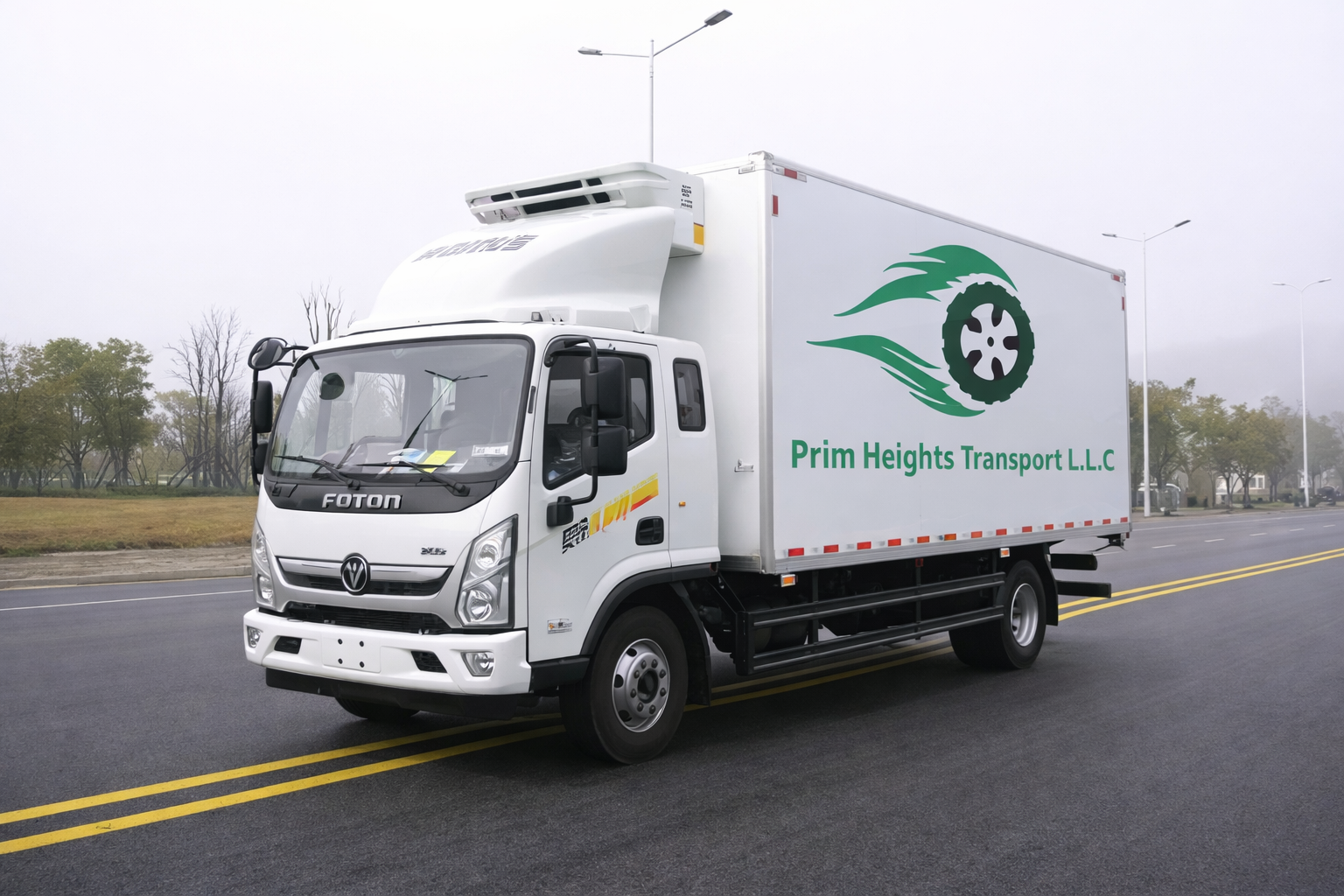


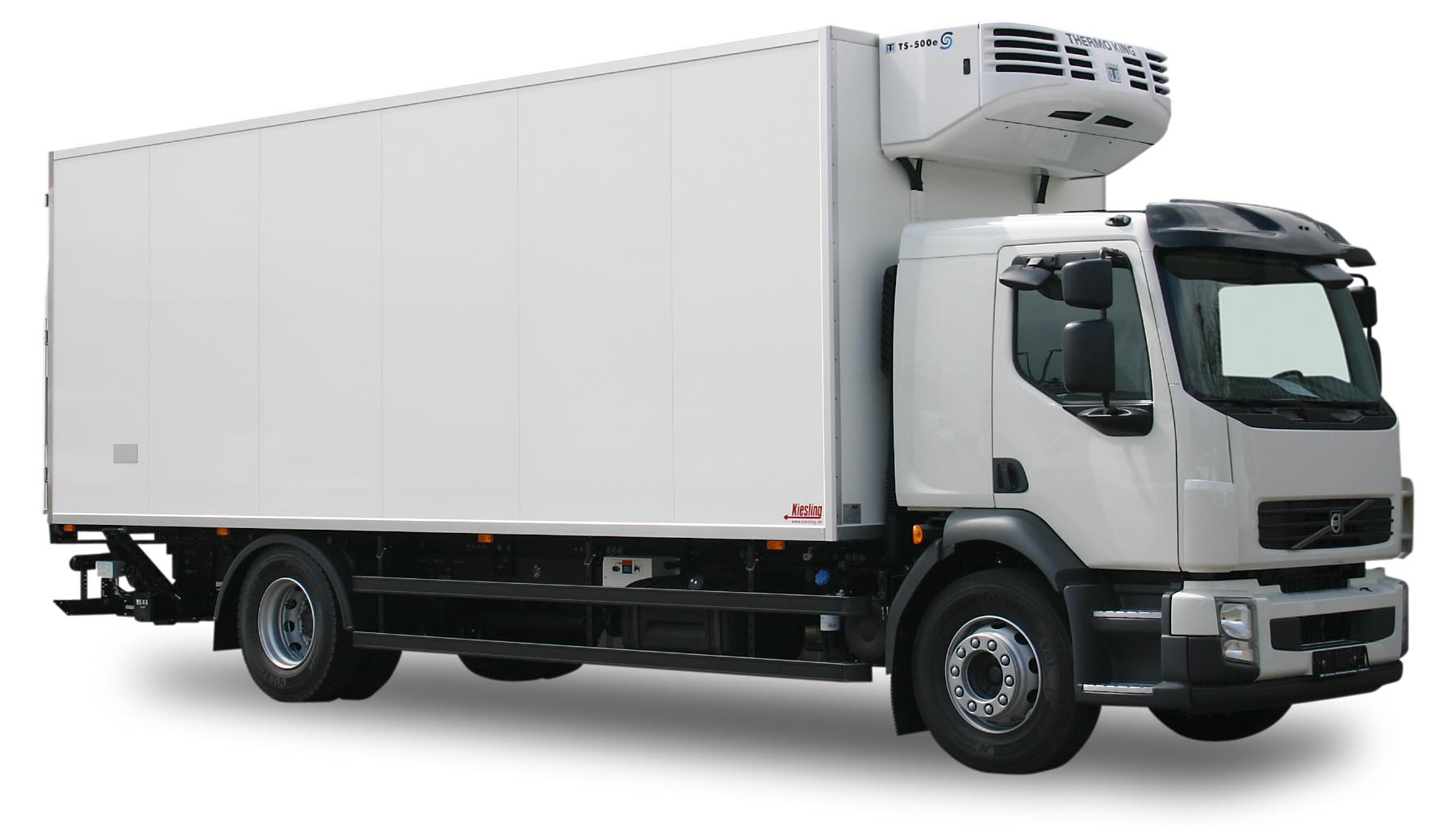
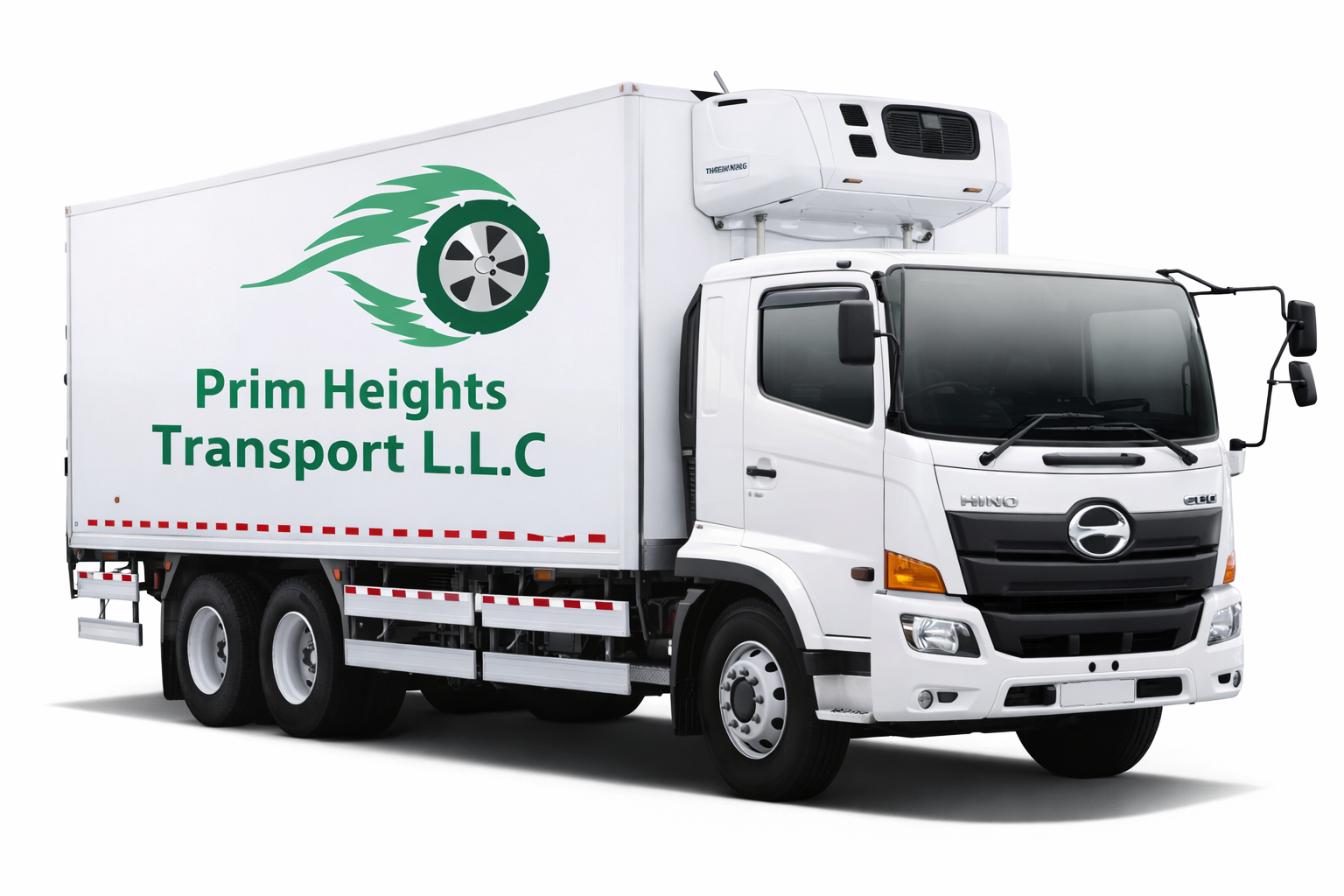
Most people only think about a Chiller Van when they need one — often the morning the delivery has to leave. This page explains the vehicle itself, in plain terms. What the box is made of, why the door matters more than the thermostat setting, and how a chiller van differs from a freezer van or a refrigerated truck.
Every unit below is one we operate out of Dubai. Chiller vans, high-roof bodies, freezer vans and the trucks that carry the bigger loads.
A chiller van is a light commercial vehicle with an insulated panel body and a fitted cooling unit. Not a van with a cooler bolted inside. The body structure, the seals and the compressor are chosen as a set, because if one of them fails, the temperature fails with it.
The cargo area is lined with a foam-core panel — usually polyurethane or polystyrene — sandwiched between GRP or aluminium skins. The floor, walls and ceiling are all insulated, which is what gives the van its thermal mass. A properly built box holds temperature for two to three hours even with the unit turned off, which is why the door seal matters more than the compressor size on a short run.
Mounted above the cab on most bodies, or under the floor on some high-roof builds. The unit has its own compressor, condenser and evaporator, and it is driven either by an engine-driven belt, a small dedicated motor or an electric standby system. The size of the unit is matched to the interior volume of the box — not to what the van "should" be able to carry.
The evaporator sits at the top of the front wall inside the box, and the thermostat reads the air temperature near it. That is why leaving a hand-width gap between the cargo and the front wall matters — if cartons block the evaporator, the thermostat reads cold air that is trapped near the coil while the load at the back stays warm.
The rubber gasket around the rear door. A torn or flattened seal is the single most common cause of temperature failure on a chiller van. It lets warm air in with every mile, not just every door open. We replace gaskets at every service rather than wait for a complaint.
Two chiller vans from two different fleets can look identical from the outside and behave completely differently on the route. What changes the behaviour:
Every van in our fleet is built on an insulated panel body with a full-perimeter rear gasket, an evaporator on the front wall clear of the load line, and a unit with a standby circuit so the box stays cold while the van is docked. That configuration is what allows the driver to keep the set point through a ten-stop route in August without the compressor working flat out the whole time.
The trade uses these names loosely. They are not interchangeable. Each one holds a different temperature band, carries a different payload and fits a different route pattern.
| Vehicle | Temperature band | Typical load | Best used for |
|---|---|---|---|
| Chiller Van | 0°C to +8°C | 4 – 5 pallets, 1 – 1.5 tonnes | Dairy, produce, prepared meals, bakery, pharmacy, chilled meat |
| Freezer Van / Frozen Van | -18°C to -25°C | 4 – 5 pallets, 1 – 1.5 tonnes | Ice cream, frozen meat, frozen seafood, frozen desserts, frozen meals |
| Chiller Truck | 0°C to +8°C | 8 – 14 pallets, 3 – 4.2 tonnes | Distribution-centre-to-store loops, bulk chilled freight |
| Freezer Truck / Refrigerator Truck | -18°C to -25°C | 8 – 14 pallets, 3 – 4.2 tonnes | Bulk frozen freight, port-to-warehouse transfers, cross-emirate frozen runs |
| Dual-Compartment Van or Truck | Both bands in one body | Split between the two compartments | Mixed chilled and frozen orders where two separate vehicles would cost more |
Customers sometimes ask for a Fridge Van Rental when they mean a chiller van, and sometimes ask for a Refrigerator Truck when they need a freezer unit. The name on the hire agreement is not what keeps the cargo cold — the temperature band on the thermostat is. If you know the band your cargo needs, we can match the vehicle. If you do not, tell us the cargo type and we will recommend one.
The same logic applies when someone calls asking for a Chiller Van in Dubai but the actual route needs the volume of a Chiller Truck, or when a customer who booked a Freezer Van discovers the load is a mixed order that needs a Freezer Truck with a dual compartment. Matching the vehicle to the load is the whole job.
The unit does the cooling. The box, the door discipline and the route order do the rest. On a ten-stop route in August, the difference between a load that arrives at set point and one that arrives warm usually comes down to how the day was planned.
Start the unit twenty minutes before the first pallet goes in. On a 45°C afternoon, a warm box takes about forty minutes to reach the chill band; a pre-cooled box is already there. Loading chilled stock into a cold box is fine — loading it into a warm box starts the recovery clock before the van has even left the yard.
Once the load is in, close the rear door immediately. The instinct to keep the door open while the paperwork is finished costs more temperature than most drivers realise. In our experience, five minutes with an open door on a 45°C day adds fifteen minutes of recovery.
Chilled cartons first, against the front wall but clear of the evaporator. Frozen boxes last, near the rear door so they are the first thing off the van at the final stop. If a route carries both temperature bands in a dual-compartment van, the same rule applies inside each compartment separately.
Each door open drops the box temperature by roughly 3°C to 6°C near the door, and the compressor needs six to ten minutes of recovery time to bring it back. That recovery window is not free — it costs fuel and it pushes the unit harder.
Route planning around recovery time is the reason a chiller van on a ten-store loop does not simply drive to the nearest store first. It drives to the store that takes the longest to unload, while the box is coldest, then works towards the short-drop stores at the end of the route when the box has already recovered and the compressor is running smoothly.
Every vehicle in the fleet has a job it is best at. For the chiller van, it is the city route with more drops than pallets and more tight bays than loading docks.
Ten restaurants, one morning, several within a few hundred metres of each other. The van fits the alley bays the trucks cannot reach, and the driver does the loop in one shift without circling back to base. Most of our restaurant clients run a standing chiller van rental route with the same driver every day.
Temperature-sensitive stock moving from a central warehouse to twenty or thirty pharmacies across the city. The van carries the load, the driver reads the display at each handover and the record goes back with the paperwork. For higher-volume medical logistics, a Refrigerated Truck with a documented cold-chain log is standard.
Fresh flowers lose value quickly in Dubai heat. A chiller van in Dubai protects stems from airport or wholesale market through to the hotel lobby. Event florists run one van across multiple venues in a single afternoon, which is faster than two separate runs with a truck.
Convenience stores, bakeries and specialty food shops that do not order enough for a full truck but still need chilled stock on a schedule. The van carries a mixed load and drops at each location in the planned order.
Meal-kit companies, premium butchers and specialty grocers doing home delivery across Dubai. The van holds the cold chain through a multi-hour drop schedule without the driver looping back to base for a reload. For frozen home delivery, a Freezer Van or Frozan Van is the better vehicle.
A Refrigerated Van for Rent in Dubai and Abu Dhabi service covers the same route as a truck at lower cost when the load is smaller. Dubai to Abu Dhabi, Dubai to Sharjah or a loop across the northern emirates are all standard routes for us. When the volume grows past five pallets, the Chiller Truck takes over the same route.
The two body shapes we run in the chiller van class are the standard body and the high-roof body. Both are single-rear-door, both fit the same parking envelope, but they load very differently.
The everyday workhorse. Inside height around 1.6 m, which means loading on the knees or with a hand trolley. Four to five standard pallets, roughly 1 to 1.5 tonnes.
Restaurant drops, pharmacy runs, small retail replenishment.
The taller variant. Inside height around 1.9 m, which allows upright loading and stacked trays. Same footprint on the road, so it parks in the same bays as the standard body.
Catering trays, tall cartons, bakery racks, flower buckets.
Two compartments separated by an insulated divider, each with its own thermostat. Chilled cargo rides up front, frozen behind the divider. Same body size as the standard van.
Mixed orders where splitting the load across two vehicles would waste budget.
Once a route needs more than five pallets, the arithmetic changes. Loading a van above its rated payload is what burns out the compressor on the third stop, not the twentieth. That is the point where a Chiller Truck or Freezer Truck carries the same freight with less compressor strain and lower fuel cost per pallet. See the chiller truck rental page or the refrigerated truck for rent page for the larger vehicle options.
Three questions decide the vehicle. If you can answer all three, the booking takes about ten minutes.
Write down the pallet count, the number of drop points and the total time you expect the route to take. Under five pallets and under six stops is a standard van. Above those numbers, look at the high-roof body or move up to a chiller truck.
Chilled dairy and produce run at 0°C to +8°C. Frozen goods run at -18°C or below. Mixed loads need a dual-compartment van. All-frozen loads belong in a Freezer Van, not a chiller van with the thermostat turned down.
Self-drive removes the daily driver allowance but requires a UAE trade licence and a licensed driver. For a standing route, a monthly or yearly contract reduces the per-day rate. For one-off runs, daily hire keeps the commitment short.
Our yard sits inside Dubai. Delivery and collection are included within the emirate and quoted separately for the other emirates. These are the routes we run most often.
Deira, Bur Dubai, Al Rigga, Satwa, Karama and the Al Fahidi area. The van's compact footprint fits the loading bays and alley drops that a full box truck cannot reach.
JLT, Business Bay, Downtown, Dubai Marina, Barsha Heights, Al Quoz and the Sheikh Zayed Road corridor. Loading bay access is confirmed with the receiving store before the route starts.
JVC, Al Barsha, Mirdif, Silicon Oasis, Dubai Sports City, Motor City and Arabian Ranches for home delivery and community supermarket routes.
Chiller van for rent in Abu Dhabi is available on the same fleet and under the same terms as Dubai. Delivery to Abu Dhabi is quoted separately based on distance, and standing monthly contracts get priority scheduling. Sharjah, Ajman, Ras Al Khaimah, Umm Al Quwain and Fujairah are all served on the same model.
For larger cross-emirate loads see the refrigerated truck for rent page. For pure frozen cargo see the frozen van rental page. For smaller fridge vans see the fridge van rental page.
We have been running refrigerated vehicles out of Dubai since 2016. The reasons our contract customers stay are operational, not marketing.
Units sit in our yard ready to go. Confirmed bookings are usually on the road the same day because there is no inbound dead-leg from another emirate to wait for.
A driver who has run the same restaurant loop for six months knows where the loading bay is, which store manager wants a call ahead and which one takes an hour to unload. That knowledge does not come from the route software.
The quote separates vehicle rate, driver allowance, fuel and salik. Nothing appears on the invoice that was not in the quote.
If a van breaks down mid-route, a replacement leaves the yard rather than waiting for a workshop repair. Contract customers get priority on the standby units.
Ready to book? Start with a quote request or see the chiller van rental page for the full hire terms.
The questions we hear from customers who are new to refrigerated vehicle hire.
Send us the cargo type, the pallet count and the dates. We will come back with a written quote and the right vehicle for the job.